The Inherited Printer Problem: Why Forgotten Devices in Your Organization Are a Compliance Liability Waiting to Surface

The Device That Predates Everyone in the Room
Every organization of meaningful size has at least one. It is the printer that arrived during a previous administration, was set up by a contractor who no longer works there, and has been quietly occupying a corner of a storage room or secondary office for years. Nobody ordered its decommissioning. Nobody confirmed it was wiped. Nobody knows what documents it processed, what network it was connected to, or whether its onboard storage still contains retrievable data.
For organizations operating in regulated industries — healthcare, financial services, legal, government contracting — this scenario is not merely an administrative inconvenience. It is a compliance exposure. And in the current regulatory environment, where data security audits are increasingly thorough and enforcement actions increasingly consequential, the inherited printer problem deserves formal organizational attention.
Why Legacy Devices Accumulate in Organizational Blind Spots
Understanding why forgotten printers persist in organizations requires understanding how they typically arrive and how asset management processes fail to track their full lifecycle.
Printers are often introduced outside of formal IT procurement channels. A department head purchases a device directly to address a workflow need. A vendor installs a printer as part of a service agreement. A satellite office is furnished during a rapid expansion and the equipment is never formally logged into the central asset management system. In each case, the device enters the organization's physical environment without entering its documentation.
Over time, organizational changes compound the problem. Teams reorganize. Offices are reconfigured. The staff member who knew the device existed and understood its purpose leaves the organization. The printer gets moved to a storage room to make space, and in the absence of any formal decommissioning process, it simply remains there — connected or disconnected, documented or undocumented, forgotten.
This is not a hypothetical scenario. It is the documented experience of a substantial proportion of US organizations that have conducted comprehensive physical asset audits for the first time.
What These Devices Actually Contain
The compliance risk posed by a forgotten printer is not theoretical. It is grounded in the technical reality of how modern multifunction devices function.
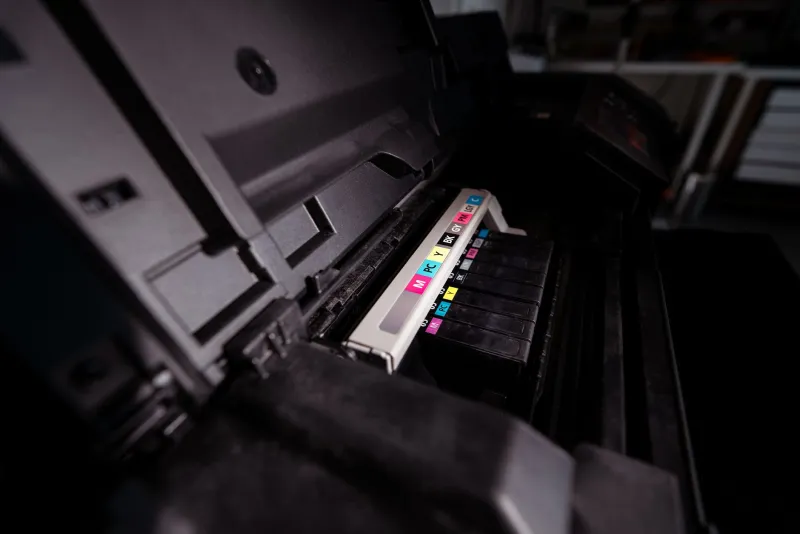
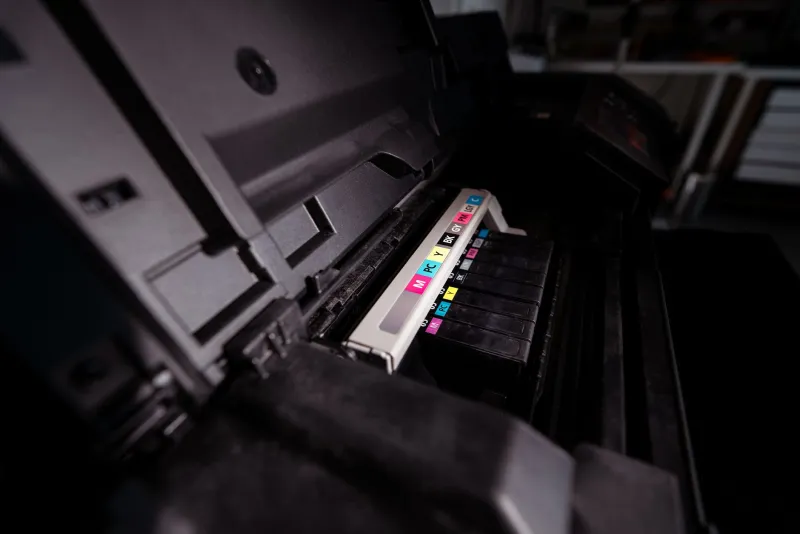
Contemporary printers — and this includes devices manufactured as far back as the early 2000s — routinely include internal storage mechanisms that retain document data beyond the completion of a print or scan job. This storage may take the form of a dedicated hard drive, flash memory, or a print buffer that persists across power cycles. In many configurations, this data is not automatically purged when a job completes; it accumulates over the operational life of the device.
For an organization that has used a printer to process patient intake forms, financial statements, legal contracts, or personnel records, the data retained on that device's internal storage may include protected health information under HIPAA, material nonpublic information subject to SOX controls, personally identifiable information regulated under state privacy laws, or confidential client information covered by professional ethics obligations.
A printer sitting in a storage room, still connected to a power source and potentially still accessible on a legacy network segment, represents an uncontrolled repository of this information. It has not been formally decommissioned. Its storage has not been wiped. And in the absence of documentation confirming otherwise, there is no way to certify that it does not contain sensitive data — which means, in a compliance audit, it must be treated as though it does.
The Audit Finding You Do Not Want to Receive
For organizations subject to formal compliance frameworks, the discovery of undocumented devices during a regulatory audit is a significant finding. It signals not merely that a piece of equipment was overlooked, but that the organization's asset management practices are insufficiently rigorous to maintain an accurate inventory of devices capable of storing sensitive data.
Under HIPAA's Security Rule, covered entities and their business associates are required to maintain an inventory of hardware and electronic media that contain electronic protected health information, and to implement policies for the final disposal and reuse of that media. A printer that processed patient records and was subsequently stored without formal decommissioning is a direct gap in that requirement.
Under SOX, public companies are required to maintain controls over systems that process or store financial data. An undocumented device that handled financial documents and remains in organizational custody without documented disposal procedures represents a control weakness that auditors are trained to identify.
State-level data privacy regulations — including California's CCPA and a growing number of similar frameworks in other states — impose their own data inventory and security requirements that extend to physical devices capable of storing personal information.
In each case, the finding is not merely about the printer. It is about what the printer's existence reveals about the organization's broader data governance practices.
Conducting a Thorough Organizational Sweep
Addressing the inherited printer problem requires a structured approach that goes beyond a standard IT asset review. The following framework provides a practical starting point.
Expand the physical search perimeter: Do not limit the sweep to active workspaces. Storage rooms, server closets, conference rooms, break rooms, and secondary offices are all common locations for forgotten devices. Include satellite locations, off-site storage facilities, and spaces that have recently been reconfigured or vacated.
Cross-reference physical findings against asset management records: For every device located during the physical sweep, verify whether it appears in the organization's asset management system. Devices that are physically present but not documented are the primary compliance concern and should be prioritized for remediation.
Assess network connectivity for all discovered devices: A device that is powered off but still physically connected to a network port may reconnect automatically if powered on. Verify network status for all discovered printers and disconnect those that are not in active authorized use.
Document the remediation process for each device: For every undocumented device identified, create a remediation record that includes the device's make, model, and serial number; its physical location at the time of discovery; an assessment of whether it is likely to contain sensitive data based on its operational history; the method used to wipe or destroy its internal storage; and confirmation of final disposition.
Implement forward-looking controls: Once the current inventory gap is addressed, establish procurement and decommissioning procedures that prevent recurrence. Every device that enters the organization should be formally logged at intake. Every device that leaves active use should be formally decommissioned, with storage wiped and disposition documented, before physical removal from service.
The Cost of Inaction
Organizations that defer this process often do so because the scope of a comprehensive physical audit feels operationally disruptive. That calculation changes materially when set against the cost of a compliance finding, a regulatory inquiry, or a data breach that traces to a device nobody remembered existed.
The inherited printer in the storage room is not a facilities problem. It is a governance problem. And governance problems, left unaddressed, have a consistent tendency to surface at the least convenient possible moment.