Counterfeit Cartridges in the Supply Chain: The Hidden Threat Quietly Destroying US Office Printers
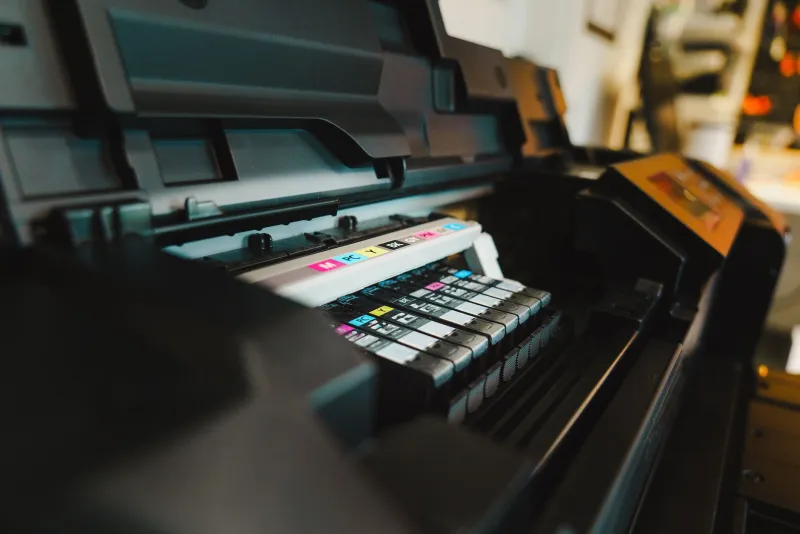
The Counterfeit Problem No One Is Talking About at the Supply Closet
When a US office manager orders printer cartridges online, the assumption is straightforward: the product arrives, it gets installed, and the printer works. That assumption has become dangerously unreliable.
The global market for counterfeit printer supplies has expanded significantly over the past decade, and the United States remains one of its primary targets. Estimates from industry research groups suggest that counterfeit toner and ink cartridges account for a meaningful share of the printer supply market in North America — with some analyses placing the figure as high as 20 to 30 percent of cartridges sold through third-party online platforms. These are not merely inferior products. They are engineered to appear genuine, packaged convincingly, and priced just attractively enough to invite purchase without triggering suspicion.
The consequences for businesses are neither minor nor hypothetical.
What Counterfeit Cartridges Actually Do to Your Hardware
A legitimate toner cartridge is a precision-manufactured component. It is designed to interact with a printer's fuser unit, drum assembly, and internal sensors in specific, calibrated ways. Counterfeit versions frequently use substandard toner powder — often with inconsistent particle sizes — that fails to fuse properly to paper at the correct temperature. The result is not simply poor print quality. Over time, the residual toner accumulates inside the printer, clogs rollers, coats optical sensors, and degrades the fuser unit itself.
Inkjet counterfeits present a parallel set of problems. Off-specification ink formulations can corrode printhead nozzles, cause ink to bleed unpredictably through paper fibers, and in documented cases, have introduced chemical residues that damage internal components over extended use.
The financial exposure compounds quickly. A counterfeit cartridge purchased to save fifteen or twenty dollars can precipitate fuser replacement costs ranging from $200 to $500 on a mid-range laser printer. In worst-case scenarios, the printer itself requires full replacement — a cost that no responsible CFO would attribute to a cartridge purchase, yet one that traces directly back to it.
Warranty Voidance: The Fine Print That Catches Businesses Off Guard
Most major printer manufacturers — HP, Canon, Brother, Lexmark, Xerox — include explicit clauses in their warranty documentation that address damage caused by non-approved or counterfeit supplies. When a technician opens a printer and identifies evidence of counterfeit toner contamination, the manufacturer's warranty obligation is typically nullified.
This is not an abstract risk. For businesses operating fleets of printers under active service agreements or manufacturer warranties, a single purchasing decision made by a procurement assistant can invalidate coverage across multiple devices. The warranty language is rarely forgiving, and the burden of proof generally falls on the business to demonstrate that only approved supplies were used.
For companies in regulated industries — healthcare, legal services, financial services — the implications extend beyond hardware damage. Document output quality and equipment certification requirements may be implicated, creating compliance exposure that legal and operations teams are rarely prepared to address.
How Counterfeit Cartridges Enter the Supply Chain
Understanding the infiltration pathway is essential to building effective defenses. Counterfeit cartridges most commonly enter US office supply chains through three channels.
First, third-party marketplace listings on major e-commerce platforms frequently host sellers offering what appear to be OEM (original equipment manufacturer) cartridges at discounted prices. Packaging is often replicated with considerable accuracy, including holographic seals and model numbers that match genuine products.
Second, unauthorized resellers — operating outside manufacturer-certified distribution networks — acquire counterfeit stock and move it through channels that appear legitimate to the end buyer. Purchase orders, invoices, and even return policies can mirror those of authorized distributors.
Third, remanufactured cartridges, which are a legitimate product category, are sometimes used as cover for fully counterfeit units. A buyer expecting a professionally remanufactured cartridge with quality-controlled refilling may receive an entirely fraudulent product.
Detection: What Procurement Teams and Technicians Should Be Checking
Identifying counterfeit cartridges before installation — or diagnosing them as the source of existing printer problems — requires attention to several specific indicators.
Packaging inconsistencies are often the first visible signal. Genuine OEM packaging uses consistent font weights, precise color registration, and specific tactile finishes. Counterfeit packaging frequently shows slight color variations, misaligned text, or holographic stickers that do not exhibit the expected light-refractive properties.
Chip authentication failures provide a more reliable technical indicator. Modern printers communicate with cartridge chips to verify authenticity. Counterfeit chips may trigger immediate error messages, generate false ink or toner level readings, or cause the printer to reject the cartridge outright. A cartridge that a printer refuses to recognize — or one that the printer accepts but immediately reports as empty — warrants close scrutiny.
Print quality anomalies during initial use, including streaking, uneven density, or toner smearing under light pressure, are consistent with substandard toner formulations.
Weight and physical feel can also be informative. Genuine cartridges have specific weight profiles reflecting proper toner fill levels. Counterfeits are frequently underfilled, resulting in noticeably lighter units.
Procurement teams should additionally cross-reference supplier credentials against manufacturer-authorized dealer lists, which most major printer brands publish and maintain publicly.
The Role of Offshore Service Providers in Supply Verification
For US businesses that have integrated remote printer support and maintenance services from providers based in India — a practice that has grown considerably as offshore technical support has become more sophisticated — supply chain verification has become a meaningful component of preventive maintenance protocols.
At Printer Service Jalandhar, supply authenticity assessment is treated as a standard element of remote diagnostic and maintenance engagements. When clients report unexplained print quality degradation, premature component wear, or recurring sensor errors, the investigation protocol explicitly includes an evaluation of the cartridge supply chain. Clients are guided through a structured verification process that examines packaging authentication markers, chip response data retrieved from printer logs, and the purchasing channel through which the supplies were acquired.
This approach reflects a broader principle: printer maintenance cannot be evaluated in isolation from the consumables being used. A printer that has been meticulously serviced will still fail prematurely if it is being fed counterfeit supplies. Integrating supply verification into the maintenance relationship closes a gap that purely hardware-focused service agreements leave open.
The cost differential between genuine OEM cartridges and their counterfeit counterparts is often far smaller than buyers assume once total cost of ownership is calculated honestly. A genuine high-yield toner cartridge that costs $85 and delivers reliable output across its full rated page count represents a lower per-page cost than a counterfeit unit priced at $40 that underperforms, damages the fuser, and contributes to a service call that costs $300 to resolve.
Building Organizational Defenses Against Counterfeit Supplies
Addressing the counterfeit cartridge problem at the organizational level requires policy as much as it requires technical vigilance. Procurement policies should restrict cartridge purchases to manufacturer-authorized distributors or explicitly vetted resellers. Purchase records should be retained in sufficient detail to support warranty claims if hardware damage occurs.
IT and facilities teams responsible for printer fleets should be trained to recognize the early warning signs of counterfeit supply use — not to assign blame, but to intervene before damage becomes irreversible.
For businesses already working with a remote printer service provider, that relationship should explicitly include supply chain consultation as a covered service area. The question of what goes into a printer is inseparable from the question of how well the printer performs and how long it lasts.
The counterfeit cartridge market is sophisticated, well-funded, and not going away. The businesses that treat supply authentication as a routine operational discipline will spend less on emergency repairs, maintain longer hardware lifecycles, and carry meaningfully less compliance risk than those that continue to treat cartridge purchasing as a purely transactional decision.